Illinois W-4 Tax Withholding Form Help
This article gives you step-by-step guidance on the Illinois W-4 tax withholding form—making it easy to figure out allowances, adjust your paycheck, and meet state tax requirements with confidence.

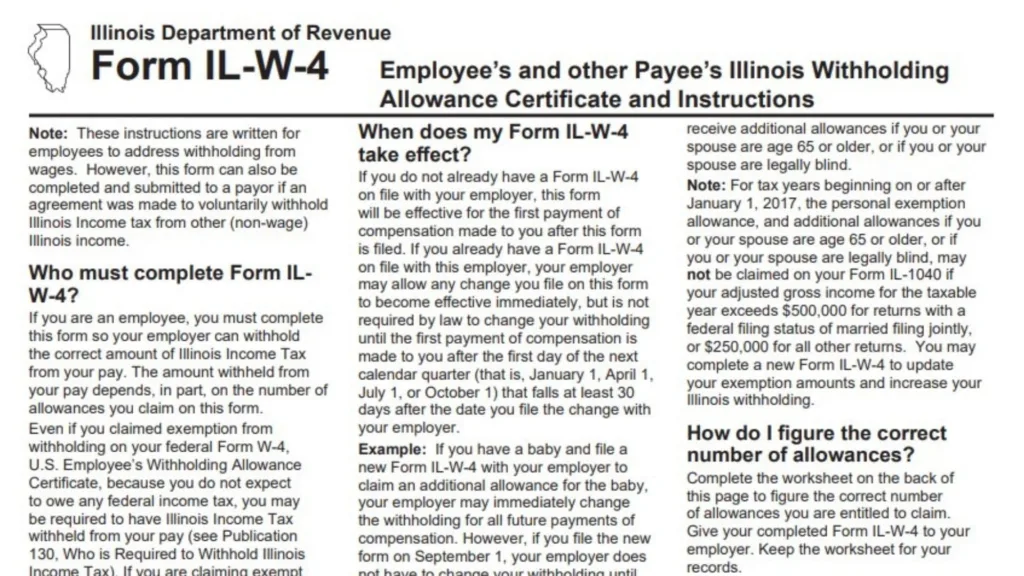
If you’ve ever wondered how the Illinois W-4 tax withholding form affects your paycheck or state income tax, you’re not alone! The Illinois W-4 tax withholding form (also called the IL-W-4 Employee’s Withholding Allowance Certificate) is used so your employer withholds the correct amount of Illinois state income tax from your pay. The number of personal and dependent allowances you claim on the Illinois W-4 determines how much Illinois state tax will be taken out of each paycheck. Claim more allowances, and less tax is withheld; claim fewer, and more is taken out. This form is essential for Illinois employees, new hires, and anyone with changes to family or finances. Understanding how to fill out the Illinois W-4 correctly helps avoid under-withholding surprises or overpaying and waiting for a big refund at tax time.
What Is the Illinois W-4 Form?
The Illinois W-4 (IL-W-4) is the form you provide to your employer to specify how much state tax to withhold from your earnings. It’s separate from the federal W-4, and completing both is mandatory if you live or work in Illinois. This form is for all employees, whether full-time, part-time, or seasonal. Employers use the information to calculate your paycheck deductions, based on the number of allowances and any extra amount you request to be withheld.
Step-by-Step: How to Fill Out the Illinois W-4
- Personal Info: Start with your name, Social Security number, address, and marital status.
- Count Your Allowances:
- One allowance for yourself (unless someone else claims you as a dependent).
- Additional allowances for a spouse or any dependents you’ll claim on your tax return.
- Use the worksheet on the form to tally these up.
- Additional Allowances:
- You can claim for being 65 or over, legally blind, or if your spouse is 65 or legally blind.
- Total Allowances:
- Add up basic and additional allowances. The more you claim, the less tax is withheld.
- Extra Withholding (Optional):
- Enter an additional flat dollar amount to be withheld from each paycheck, if needed, to cover side jobs, extra income, or to avoid a year-end tax bill.
- Claim Exempt (if eligible):
- If you meet the requirements to be exempt from Illinois withholding (rare), check the exempt box. You must still sign and return the form even if you claim exemption.
- Sign and Date:
- The form isn’t valid unless signed. Be sure to complete all sections needed for your situation.
Pro Tips for the Illinois W-4
- Always update your Illinois W-4 if your situation changes—getting married/divorced, having children, or picking up another job.
- Claiming fewer allowances results in more tax withheld and possibly a refund; claiming more means more take-home pay now (but be careful not to underpay!).
- If you don’t file an IL-W-4, your employer must automatically withhold tax at the “single, zero allowances” rate—the maximum.
Mistakes to Avoid
- Not adjusting your Illinois W-4 after life changes.
- Forgetting to sign the form—it will be invalid and trigger maximum withholding.
- Over-claiming allowances and ending up under-withheld (and possibly facing a penalty at tax time).
- Assuming the federal and state W-4 are the same—they have important differences!

Getting More Help
- Visit the Illinois Department of Revenue website for detailed forms and up-to-date info.
- Contact your employer’s payroll office for guidance on submitting or updating your form.
- For tricky tax situations, consult a tax professional or use an online tax withholding estimator tool.
FAQs
Q: What is the main purpose of the Illinois W-4 form?
A: It ensures the correct amount of Illinois state tax is withheld from your paycheck, based on the allowances you claim.
Q: What happens if I don’t submit an Illinois W-4?
A: Your employer must withhold state taxes at the highest rate (single, zero allowances), which means less take-home pay.


